The Reputation You Already Have Is Your Best Sales Tool
Here's something most moving company owners miss. The reputation you've been building at your current job, or even at previous jobs you've held, is worth a lot more than you think.
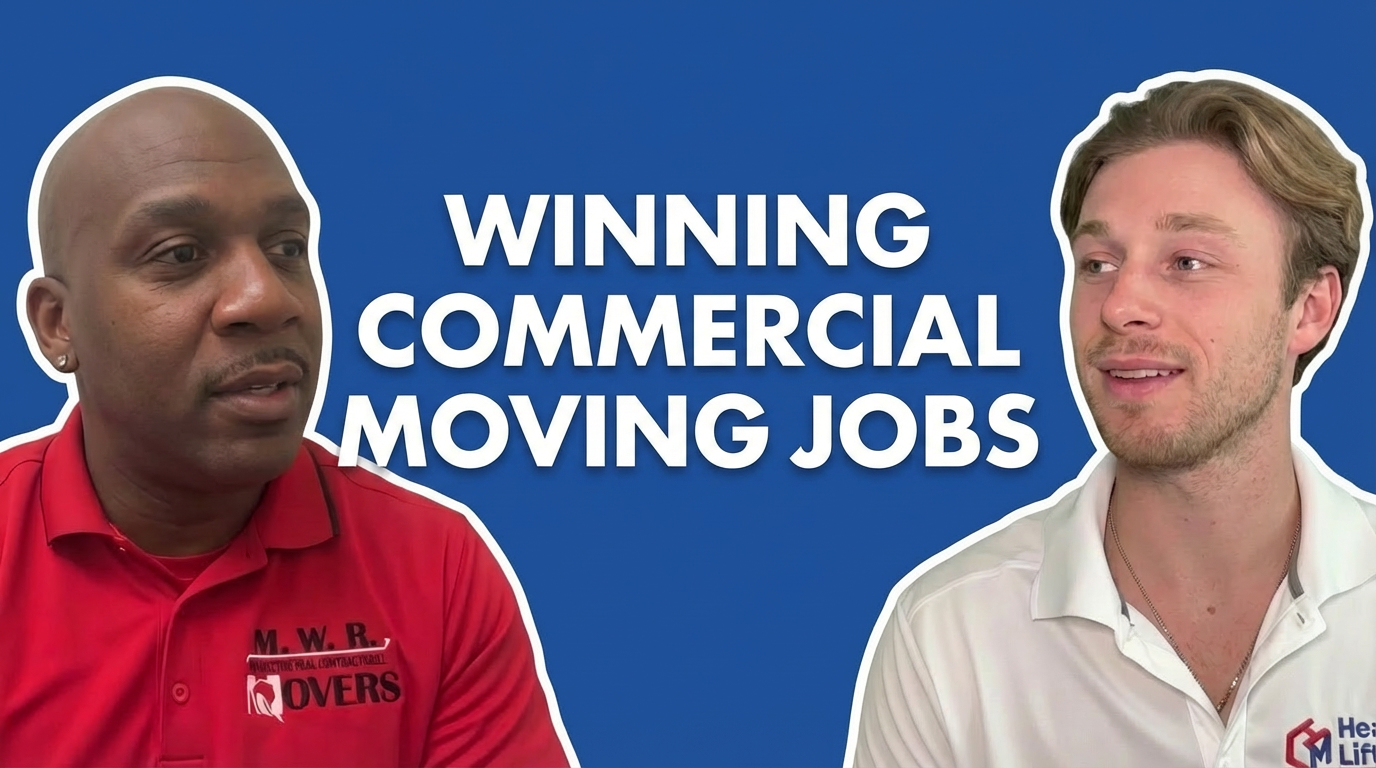
Marvin Williams of MWR Mover spent 19 years delivering furniture for Madden Brothers before he started his own company. When he was there, he made sure every single delivery was done right. He wraps furniture properly. He gets up the stairs with the heavy stuff when others won't. He's fast because he's always treated it like a job with a deadline.
And over time, clients started asking for him specifically. Delivery locations in Captiva would just hand him the keys. They knew he'd handle it.
When Marvin went out on his own, that reputation followed him. The people who knew his name from Madden Brothers started calling MWR Mover for contracts. Including a job that would change his business completely: 80 condo units in Captiva after a hurricane, no elevator, third floor. Every other company said no. Marvin said yes. He'd done it a hundred times before.
The lesson here is simple. If you're running a moving company, the reputation you're building on every single job is a long-term sales asset. Treat it like one.
How Marvin Landed His First Commercial Contract (The Scan Design Story)
Marvin's first real commercial contract came from Scan Design, a furniture retailer in the Fort Myers area. And the way he got it is something any moving company owner can replicate.
He was already dropping yard signs around town. One call came in from Scan Design asking if he could handle regular furniture deliveries across Naples. Eight or nine stops a day. He said yes without hesitating.
He did the job clean. And while he was there, he did something he'd learned from his days at Madden Brothers: he told customers, "If you liked the service, let the owner know about Marvin." He was collecting social proof before it was even called that.
The reviews started coming in. Scan Design's owner noticed.
Then came the second call. "Do you have another truck for Tampa?"
Marvin said yes. He didn't have a second truck. He went out and found one fast, got it licensed, and called back ahead of schedule to let the client know he could start earlier than promised.
That contract ran for three years. And it funded his growth.
The key move here was saying yes before he had all the pieces in place. He bet on himself, then figured out the logistics. That's a pattern you'll see with a lot of successful moving company owners.
Nursing Homes: The Most Overlooked Referral Source in This Business
When Marvin talked about his best non-digital marketing channels, one stood out. Nursing homes.
Here's how it works. People in nursing homes are constantly moving in, and unfortunately, constantly moving out. There's a steady, predictable churn of furniture and personal belongings that needs to be handled. And the people coordinating those moves are not the receptionists, they're a specific person: the moving coordinator.
Most moving companies who try this approach hand their card to the person at the front desk and never hear back. That card gets thrown in a drawer or tossed. Marvin's point is that you need to get past the front desk. You need to reach the moving coordinator directly and make your ask clearly: give me one shot. I won't disappoint you.
Once you build that relationship with one coordinator, it can mean consistent referral work for as long as you maintain the relationship and keep doing quality jobs. And given the turnover in those facilities, the volume of moves can be substantial.
It's not a strategy that works overnight. But it's one of those channels that most competitors aren't working, which means the relationship is there for the taking.
The Yard Sign Strategy That Still Works
Marvin's yard sign approach is simple and cheap. He orders from a site called UZ Marketing. At the time of recording, it was about 100 signs for $100. He gets the 12 by 18 size. Picks up metal stakes from Home Depot, cuts them down, and starts putting signs out.
Where does he put them? New developments. Storage facilities. High-traffic roads like US 41 in Fort Myers.
He also walks into storage facilities in person, introduces himself, and drops cards. Storage customers are people who are either in the middle of a move or about to be. It's a targeted audience.
The mindset piece matters here. Marvin made a clear point: you can't expect the phone to ring the same day. Or even the same week. Yard signs are a planting seeds strategy. You go out, you do the work, and the calls come later. If you give up after one round because nothing came in immediately, you'll never know what that sign would have produced three weeks later.
This is cheap enough that most moving companies can run this strategy alongside their digital marketing. The combination of physical presence (signs, cards, door knocking) and digital presence (Google Ads, SEO) is where you start to see consistent lead flow.
How to Price Commercial and Residential Jobs Without Losing Customers
Marvin runs a two-man crew as his baseline at $195 per hour. He has a four-hour minimum, but he'll adjust based on the job and the customer.
He made a point that took me a second to really sit with. After all this time in the business, he says he can read a customer within the first minute of a phone call and figure out what price range will get them to say yes. That's a sales skill you only develop by doing a lot of quotes. But the underlying system he uses can be learned.
For smaller jobs where the four-hour minimum pushes someone away, he'll reframe it: $250 per hour on a two-hour minimum. That gets to a similar revenue number without the commitment that scares some customers off. For large mansions or full packing jobs, flat rate makes more sense because you can account for materials, time, and the complexity upfront.
Average job size in Fort Myers according to Marvin: roughly $800 to $1,000.
For commercial contracts, the math changes. You're trading slightly lower per-job margins for volume and predictability. When Scan Design was calling every week with 8-9 delivery stops, that's a different kind of revenue than chasing individual residential leads. Steadier. More plannable.
Building a Five-Star Team (And Keeping Them)
Marvin hit 100 five-star Google reviews. He was deliberate about it.
His approach to his team isn't just rules and enforcement. He takes the guys out on his boat. He gives Christmas bonuses and Thanksgiving gift cards. He rotates hours so nobody goes without work for too long. He tells them regularly: the better work you do, the more reviews we get, and the more jobs come in. It's not abstract. It connects their daily effort to their weekly paycheck.
On the job quality side, he's firm. Zero tolerance for touching anything they shouldn't. Show up clean. Uniform tucked in. Look the customer in the eye when you introduce yourself. Shake their hand. Smile when they open the door.
That last part sounds basic. But Marvin said it with real conviction: your appearance is your first advertisement. If you pull up looking like you don't care, the customer has already formed an opinion of your company before a single box moves.
He also made the point that one bad Google review can undo a hundred good ones. Most people browsing reviews will find the negative one. They'll wonder if that's the real story and all the others are fake. One bad job doesn't just lose you that customer. It costs you everyone who reads the review and chooses a competitor.
The Truck Buying Framework
Marvin's take on when to buy a second truck is practical.
If your first truck is booked Monday, Tuesday, and Wednesday and you're still getting calls asking about availability on those same days, it's time. The demand is already there. Don't let it walk out the door while you're waiting to feel "ready."
His savings threshold before pulling the trigger: $40,000 in the bank.
For the truck itself, he recommends starting with a GMC Savannah 16-footer. The one he bought off Craigslist in 2017 for a few thousand dollars (it was rusted, he spray-painted the undercarriage and cleaned up the rims himself) is still running today. Still making him money. When you move up to a larger truck, he says get a Freightliner or International with a Cummins engine. And always bring a mechanic before you sign anything. He's been burned before by trucks that drove perfectly for the test ride and then revealed problems a few days later.
One more thing he mentioned: if you can avoid monthly truck payments, do it. That loan payment doesn't care whether your phone rang this week or not. Paying cash for used trucks, at least early on, removes a fixed cost that could hurt you in a slow stretch.
What This Means for Your Moving Company
Marvin Williams started with $20,000 in savings, a Craigslist truck, and 19 years of furniture delivery experience. He didn't have a marketing agency. He didn't have a big ad budget. He had a reputation he'd built one delivery at a time, and he knew how to work.
The fundamentals he described aren't complicated. Say yes before you have all the pieces. Protect your reputation with everything you have. Find the moving coordinator at the nursing home, not the receptionist. Put signs where people are moving, in front of storage facilities and new developments. Build a team that cares about the work as much as you do. And when demand justifies it, buy the next truck.
Where digital marketing comes in is when you're past the survival stage and you want to scale those fundamentals. Google Ads, Local Services Ads, and SEO don't replace what Marvin does. They amplify it. You're getting in front of people who are already searching for a mover right now, people who are already close to buying.
If you're a moving company owner who's doing good work but struggling to get consistent leads, that's the gap we help close at Heavy Lifting Marketing. We work exclusively with moving companies, which means we're not learning the industry on your dime. We've been in it.
Want to see what consistent lead flow could look like for your company? Schedule a call with us today and let's talk about your specific situation.